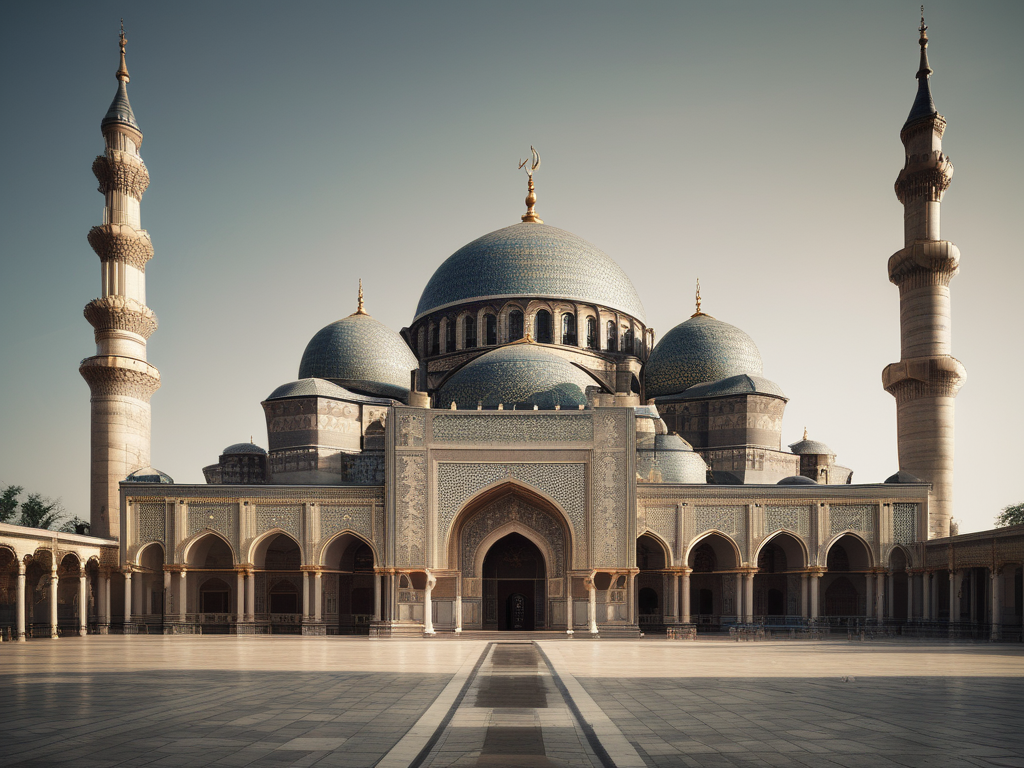
The story of Karbala is one of the most poignant and significant events in Islamic history, particularly for Shiite Muslims. It took place on the 10th of Muharram in the year 680 CE (61 AH) and is remembered as a tragic battle that resulted in the martyrdom of Imam Hussein ibn Ali, the grandson of the Prophet Muhammad.
BackgroundUmayyad Rule:
After the death of the fourth caliph, Ali ibn Abi Talib, the Umayyad dynasty came to power under Muawiya ibn Abu Sufyan. Muawiya established a hereditary system, appointing his son, Yazid, as his successor. This was controversial and opposed by many, including those who believed the leadership of the Muslim community should remain within the Prophet’s family (Ahl al-Bayt).
Imam Hussein’s Stance:
Imam Hussein, the son of Ali and Fatimah (the Prophet Muhammad’s daughter), refused to pledge allegiance to Yazid. He viewed Yazid’s rule as unjust and contrary to Islamic principles. Many in Kufa (in modern-day Iraq) invited Hussein to lead them in revolt against Yazid’s rule, promising him support.
Journey to Karbala
Imam Hussein, his family, and a small group of supporters set out for Kufa. However, before they could reach Kufa, Yazid’s governor in Iraq, Ubaydullah ibn Ziyad, sent a large army to intercept them. Hussein and his followers were forced to stop at Karbala, where they were surrounded by Yazid’s forces.
The Battle
The standoff lasted for several days, during which Yazid’s forces cut off access to the Euphrates River, depriving Hussein’s camp of water. On the 10th of Muharram, known as Ashura, the battle ensued. Despite being heavily outnumbered, Hussein and his supporters fought valiantly. The battle resulted in the death of Hussein, his family members, including his infant son, and many of his companions.
SignificanceMartyrdom and Sacrifice:
Hussein’s martyrdom is seen as a symbol of the struggle against tyranny and injustice. His willingness to sacrifice his life and the lives of his loved ones for the principles of Islam has made him a revered figure, especially in Shiite Islam.Ashura: The day of Ashura is observed by Shiite Muslims with mourning rituals, reenactments of the battle, and various forms of remembrance and reflection. It emphasizes the themes of justice, resistance against oppression, and the importance of standing by one’s principles.Unity and Division: While the events of Karbala are central to Shiite identity, they also highlight the historical and theological divisions between Sunni and Shiite Muslims.
For Sunnis,
Ashura is observed primarily as a day of fasting in remembrance of Moses and the Israelites’ deliverance from Egypt, based on a tradition from the Prophet Muhammad.The tragedy of Karbala remains a powerful narrative in Islamic history, inspiring devotion, reflection, and a commitment to justice and moral integrity.
A litte poetry on Tragedy of Karbala
In the heart of Karbala, a story told,
Of sacrifice and valor, brave and bold.
Imam Hussein, with his kin so dear,
Stood firm for justice, without fear.
On the sands of that sacred plain,
Flows a river of sorrow, a martyr’s gain.
The tenth of Muharram, a day so stark,
Witnessed the light against the dark.
Under the blazing, relentless sun,
The battle of truth had just begun.
Seventy-two stood against a horde,
With faith their only shield and sword.
Thirst unquenched, yet spirits high,
For justice, they were ready to die.
Hussein’s cry, “Is there any to help?”
Echoed in hearts, made tyrants yelp.
The plains of Karbala, drenched in blood,
The Euphrates witnessed a sacred flood.
Each drop a testament, each life a tale,
Of the eternal truth that would prevail.
Ali Asghar, an infant’s cry,
Pierced the heavens, questioned why.
A tyrant’s arrow, a cruel reply,
Innocence silenced, under the sky.
Zainab’s strength, like a mountain stood,
Against the wave of tyranny’s flood.
Chains could not bind her spirit free,
In her voice, the truth’s decree.
Oh, Karbala, a name so revered,
By hearts devout and souls endeared.
Your story weeps through the sands of time,
A mournful elegy, a sacred rhyme.
In every tear, in every sigh,
The legacy of Karbala will not die.
A beacon of hope, a light so pure,
The truth of Hussein shall always endure.
 𝚔𝚊𝚞𝚜𝚊𝚛_◦writes✿◉●•◦
Leave a comment